
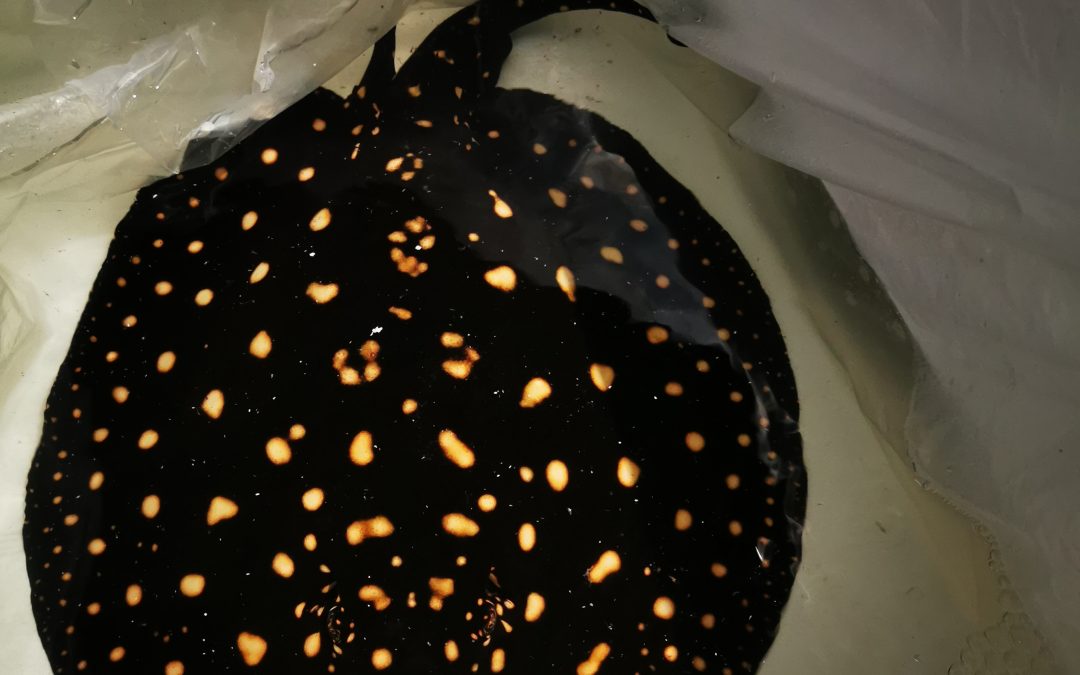
Fresh Water Stingray
Feeding your Fresh Water Stingray correctly ensures a healthy stingray from pup size to adults. Feeding also affects your water quality and so much more]
We will evolve our posts as we find new techniques, product,s and information.
Observing the SA Freshwater Stingrays hobby and market space you will encounter hobbyists, breeders and Dealers. Often eager to follow what we’ve heard and seen online, internationally or on offer via the Pet Trade. This both a good AND a bad thing, as we are in a limited hobby and population situation.
Since RayFever.com Is based in South Africa and the only large-scale Fresh Water Stingray breeder. We will cover what we know to work and include supplier options available to you from your pet store, seafood supplier or specialist such as ourselves…more on that later.
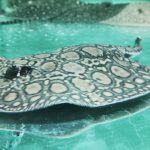
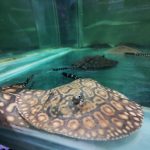
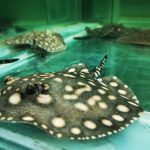
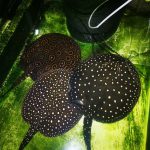
Our favorite pets , in this case, River Stingrays are exclusively Freshwater, and almost exclusively Potamotrygon spp, with other genera very rarely available or encountered. Most of what we discuss is thus targeted at this description but it will guide you in the general care of their other relatives whether South American, African or Asian species.
Fresh Water Stingray Feed has a multitude of options some good and some not so great.
Durophagous predators
Durophagous .. Now THERE’S an interesting new word! Our Potamotrygon species are broadly speaking capable of biting, chewing, and grinding whole or portions of whole food and prey organisms. Interesting research has shown how freshwater rays DO indeed employ jaw mechanics to chew their food much like a goat (or us for instance)
Newborn and younger pups will of course eat softer, or less robust, smaller prey organisms, as well as smaller portions compared to large Juvenile and Adult
We find especially shelled-animals , or those with a tough outer covering such as Crustacean, Bivalve, other Mollusc, Insect and other invertebrates make up Neonate and young Ray diets… Now we know smaller Rays will do best with, smaller softer food, and larger Rays prefer larger AND Harder food.
Whole fish and worms will also make up a good portion of Freshwater Stingray diet, not mentioned above, since they are generally a less, crunchy hard food category, yet are readily taken and accepted by Stingrays.
Broadly speaking, the preceding descriptions refer to the following organisms as foods either whole or cut/diced to the appropriate size. Consider Shrimp, Prawn, Crab, Crayfish, Snails, Slugs, Mussels, Clams, Scallops, Octopus, Squid, Mealworm, Earthworm, Bloodworm and Mosquito larvae, Smelt, Whitebait, Silversides, Sardine, Pilchard.
To combine the available published and online information online , with our own long-term experience could help improve your own SA Stingray keeper’s experience. Either with a less than eager Ray, new Pups or a recent purchase disinterested in all you have offered or have available. You may also reach out to us for help, and we will assist where possible
Which foods exactly? In extensive literature surveys and research we see this will be dictated by Ray species , size, age, seasonal conditions, prey availability, hydrological changes which determine if Rays are occupying large roaming areas or restricted space with rising and lower water levels, water temperature and other appetite stimuli. When a favoured food organism is in low supply, adaptability to a diet change makes the world of a difference between survival and death
Rays are cold-blooded creatures, this determines their activity and diet as dictated by surrounding temperature. Species and Age factors, and whether they are Tropical, Subtropical or Temperate species will guide you in both temperature and diet choices.
In captive environments, we aim to maintain stable water conditions and high water quality. This is critical for safe long-lived, healthy Stingrays! The aim is to provide a low stress environment, but proves less than ideal in replicating their ecosystem, yet is the most accessible method to accommodate Rays in captivity.
In nature, or in large captive outdoor water bodies or massive indoor housing that allows for variable temperature at different locations and depths, Rays will move from areas of warmer to cooler, deeper water, or inshore beaches and shallows or sandbanks. This roaming behaviour allows animals the choice… to bask after a meal to promote digestion, or chill in the deeper, shaded or cooler water inflows.
We will look at what is often recommended, Prawns, and white fish fillets.. While they can indeed nourish Rays, they are deficient and may even lead to nutritional deficiencies. Especially Prawns and many seafood species including fish and molluscs. Notably, vitamin B1 , due to Thiaminase which breaks down and reduces vitB1 provided by the food. This is where supplementation, rotating and including other food that do NOT contain Thiaminase and , the most readily available remedy, is good dry food. Which will have a full complement of Vitamins, Minerals, Lipids as Oils or Fats, Essential Fatty Acids, Amino Acids, Carbohydrates, Functional components such as Digestive Enzymes, Immune Boosters, Appetite Stimulants, Prebiotics, Probiotics, Dietary Fibre, and NOT just a Quantity of Quality Protein in a fish food, that goes a long way to promoting Health, Vigour, Growth, Disease Resistance, Immunity,
Injury or Wound Repair , Strong Reproductive System capable of both Fertile mating, Good Gestation, and Healthy Delivery of stable, Healthy Pups. Since Prawn and white Fish eg, Pangasius(Pangas or Basa), Tilapia, Hake are most commonly recommended, it’s important to note, neither are whole food organisms, even if your choice includes types that do not have Thiaminase activity.
Very young fish, recently delivered Pups, New imports, Females recovering from bites and damage in courtship and mating, during the resultant pregnancy, and after delivery. Instances of Interspecific aggression often outside of mating and between individuals of the same sex, recovery from Disease or long, stressful transport would be fed increasingly larger or more frequent smaller meals to compensate for their condition, until a satisfactory state is achieved and observed.
Regarding temperature, Rays do well between 25 and 30C. Younger Rays closer to the upper end, Older, and nonbreeding Rays towards the lower end. Personally, we do not recommend less than 26-27C for general maintenance of Rays around a year or older, and it allows us the possibility of using temperature to manipulate appetite in the case of new and younger Rays.
We will look at fresh, and frozen foods compared to quality Dry feed in our next blog
Contact us for more details Contact us
-
- Pups ready for shipping
-
- Ready for breaking
-

- New pups weekly
-
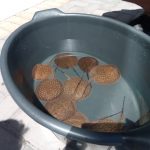
- New born pups
Recent Comments